Building Memory
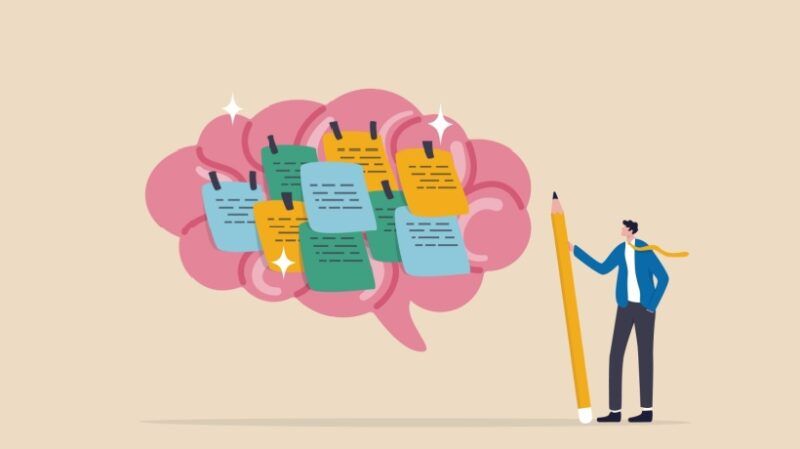
Memory is not a passive recording device. It does not capture everything presented to it. Memory is selective and constructive. The brain stores information when it is meaningful, when it can be connected to something familiar, and when it can be visualized or experienced. For centuries, one of the most effective methods for strengthening memory has been the memory palace. It is simple, powerful, and deeply aligned with how the human brain evolved to store and retrieve information.
The memory palace is a mental space. Information is placed within a familiar environment, such as a house, a childhood neighborhood, or a building. Instead of trying to remember a sequence of abstract ideas, the learner recalls the path through the space. Each piece of information is tied to a location along that imagined path. Because humans are extremely good at remembering places, the memory palace uses spatial memory to make abstract content easier to recall.
Even in modern education, surrounded by digital tools and Artificial Intelligence, the memory palace offers something unique. It creates mental clarity. It organizes complexity. It allows learners to retrieve information without external aids. In a world filled with endless information, learners benefit from techniques that help them to hold on to what matters.
Spatial Thinking Makes Information Stick
Spatial memory is one of the brain’s strongest capacities. Humans are wired to remember the layout of environments. The ability to navigate, remember routes, and recall the position of objects is fundamental to survival. When information is associated with a location, recall becomes easier and faster because the brain already has an efficient system for remembering places.
The memory palace taps into this strength. Abstract concepts become tied to spatial landmarks. Instead of trying to remember a sequence of ideas within a list, the learner remembers walking through a hallway and noticing those ideas along the way. The path becomes the organizer. The space becomes the structure that the working memory cannot provide on its own.
Spatial pathways reduce mental strain. The brain no longer has to hold everything at once. It simply moves through the memory palace, retrieving ideas as it encounters them.
Imagery Strengthens Neural Encoding
Imagery makes memory vivid. When information is paired with visual detail, the brain forms stronger pathways. The memory palace encourages learners to attach visual images to concepts and place those images in distinct mental locations. The imagery does not need to be realistic. It can be symbolic or exaggerated. The more vivid the image, the stronger the memory.
Imagery captures attention. Attention is the foundation of memory. When the learner intentionally creates imagery, they move into a deeper level of processing. Information shifts from short-term exposure to long-term retention when the learner builds a personal mental representation of the idea. Imagery anchors meaning. The image serves as a visual cue, and the location serves as the retrieval pathway.
The Memory Palace Reduces Cognitive Load
Working memory can only hold a small amount of information at once. When someone studies using repetition or rereading, every concept competes for limited space. The memory palace reduces this cognitive demand by externalizing structure. Instead of remembering an entire sequence, the learner remembers the path that contains the sequence.
Each location in the memory palace holds only one idea. This distributes cognitive load across multiple mental spaces. The learner no longer needs to think about everything at once. They retrieve concepts one at a time as they mentally walk through the palace. The process reduces cognitive overload and organizes learning in a way the mind can easily manage. The memory palace simplifies complexity. It turns challenging information into a path.
Encoding Becomes An Active Process
Many learners mistake exposure for learning. They reread slides, highlight sentences, or watch videos multiple times. These activities feel productive because the content becomes familiar. Familiarity is not mastery. Mastery requires active engagement.
The memory palace forces active engagement. It requires the learner to decide what information belongs in the palace, where it should go, and what image will represent it. This process deepens understanding because the learner interacts with the material, organizes it, and assigns meaning to it. The act of building a memory palace requires thinking. The thinking creates retention. Memory is strengthened through transformation, not repetition.
The Memory Palace Supports Lifelong Recall
Digital tools store information for us, but they cannot retrieve it when we are thinking, presenting, or problem-solving. The memory palace stores information internally, where it remains accessible without notes or devices. This provides confidence. The learner knows the information is retrievable because they placed it within a mental structure.
The memory palace is particularly useful for material that must be remembered in sequence or for material that must be prepared for discussion without reference to notes. It becomes a mental filing system that travels everywhere. Learners gain independence when they can retrieve knowledge without assistance.
Memory Is Designed, Not Found
Memory is not a mystery. It is a skill. The memory palace reveals that memory improves when information is organized spatially, visualized strongly, and retrieved intentionally. It teaches learners that memory is not something that happens to them. Memory is something they build.
Modern learners live in a world of overwhelming information. The memory palace gives them a way to navigate that world with clarity. It turns content into a mental journey, transforming the learner into an architect of their own memory. Learning deepens when the mind has a place to go.