In a time marked by complexity and rapid change, the Franciscan theological tradition offers a rich intellectual landscape, one that invites both rigorous inquiry and a renewed sense of wonder.
Approached through a purely academic lens, the Franciscan school stands as a distinctive voice in the history of ideas. It’s a tradition that:
- Honors each person’s God-given uniqueness and dignity.
- Sees all creation as sacred and interconnected.
- Finds joy in the profound relationality of humanity, nature, and the divine.
Some of the questions that resonate with those interested in Franciscan theology
If you are an individual who finds joy in studying intricate concepts and is drawn to exploring theological depth, the Franciscan intellectual tradition offers an expansive terrain for you.
This tradition celebrates a theology of incarnation, relationality, and Christ’s primacy, offering a hope-filled way of seeing the world. Consider these profound questions that have shaped centuries of reflection:
- Human Dignity and Relationality: How does the Franciscan conviction that “every individual is created in the image of God” shape our understanding of personhood and our relationships with one another?
- Creation and a Christ-centered vision: In what ways does an approach rooted in creation, Christ’s primacy, and a Christ-centered vision of reality reshape our theological approach to how we relate to the environment and our neighbor?
- Contemporary Challenges: What insights arise when we consider a Franciscan theology of creation that sees all creatures as brothers and sisters, in the context of contemporary ethical, environmental, and social issues?
These inquiries are not just intellectually stimulating; they open pathways to a broader, hope-filled way of seeing the world.
Recommended Reading List on Franciscan Theology
If you feel drawn to engage with these concepts and practices, the following resources have been curated for you to both challenge and inspire. They provide an excellent starting point for nurturing your academic curiosity within the rewarding field of Franciscan theology.
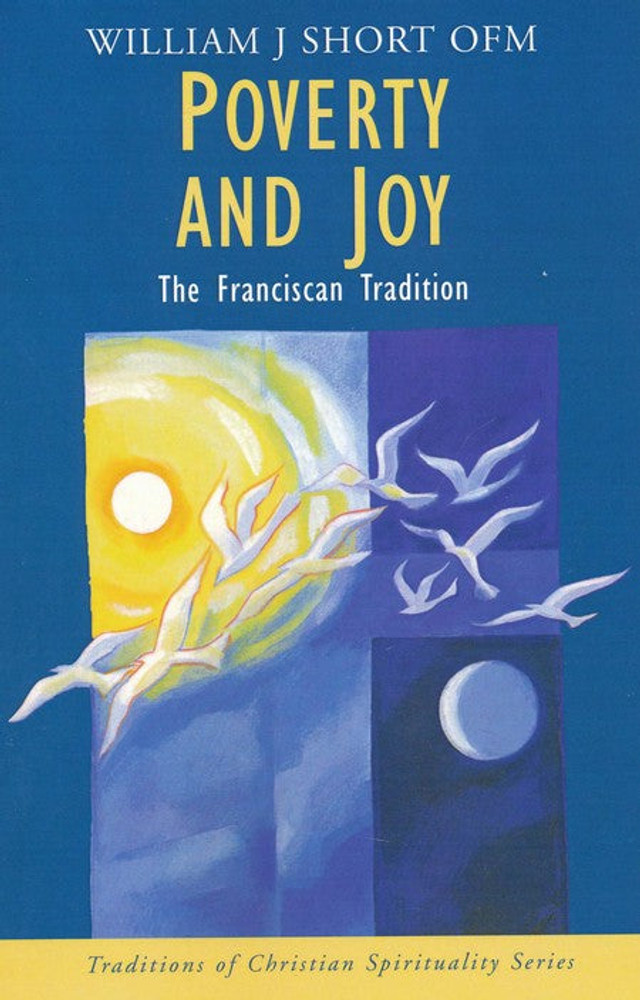
Poverty and Joy
The Franciscan tradition is as appealing a way of life today as it has been for centuries. William Short focuses first on the importance of the order’s founders, Saint Francis and Saint Clare of Assisi, offering a historical introduction. He then reflects on key themes: the Incarnation, poverty as a way to God, suffering and healing, and creation–humanity and nature in harmony. He introduces key figures in the Order: Bonaventure, Angela of Foligno, and John Duns Scotus, who have helped shape the Franciscan vision and brought it to life through the ages.
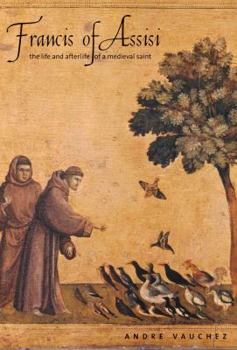
Francis of Assisi: The Life of a Medieval Saint
Chronicles the life and legacy of the famed Christian saint and places him in historical context by examining writings by contemporaries and noteworthy people
After a detailed and yet engaging reconstruction of Francis’s life and work, Vauchez focuses on the myriad texts — hagiographies, chronicles, sermons, personal testimonies, etc. — of writers who recorded aspects of Francis’s life and movement as they remembered them, and used those remembrances to construct a portrait of Francis relevant to their concerns. We see varying versions of his life reflected in the work of Machiavelli, Luther, Voltaire, German and English romantics, pre-Raphaelites, Italian nationalists, and Mussolini, and discover how peace activists, ecologists, or interreligious dialogists have used his example to promote their various causes. Particularly noteworthy is the attention Vauchez pays to Francisʹs own writings, which strangely enough have been largely overlooked by later interpreters
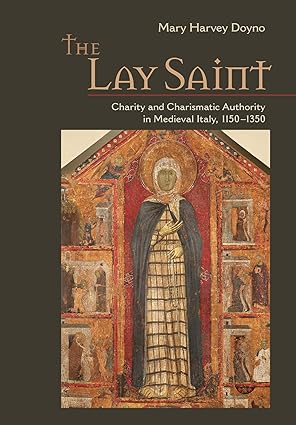
The Lay Saint
Mary Harvey Doyno investigates the phenomenon of saintly cults that formed around pious merchants, artisans, midwives, domestic servants, and others in the medieval communes of northern and central Italy. Drawing on a wide array of sources—vitae documenting their saintly lives and legends, miracle books, religious art, and communal records—Doyno uses the rise of and tensions surrounding these civic cults to explore medieval notions of lay religiosity, charismatic power, civic identity, and the church’s authority in this period.
Although claims about laymen’s and laywomen’s miraculous abilities challenged the church’s expanding political and spiritual dominion, both papal and civic authorities, Doyno finds, vigorously promoted their cults. She shows that this support was neither a simple reflection of the extraordinary lay religious zeal that marked late medieval urban life nor of the Church’s recognition of that enthusiasm. Rather, the history of lay saints’ cults powerfully illustrates the extent to which lay Christians embraced the vita apostolic—the ideal way of life as modeled by the Apostles—and of the church’s efforts to restrain and manage such claims.
Women of the Streets: Early Franciscan Women and their Mendicant Vocation
Since the role of women within the Franciscan tradition has usually been studied with respect to Clare and her sisters who followed in the footsteps of Francis primarily inside the cloister, a book about mendicant women outside the cloister is unique. But this short study goes further by positioning the texts about these early mendicant women within the history of the Franciscan intellectual tradition, a history usually written with respect to the theological, philosophical and pastoral achievements of men.
Rose of Viterbo, Angela of Foligno, Margaret of Cortona, and Sancia, Queen of Naples, were all born within the first century of the Franciscan Order. As women who pursued their religious vocation of voluntary poverty, itinerancy, and preaching outside of monastic walls – in the streets and in their homes – they could very well be called the first generation of mendicant women.
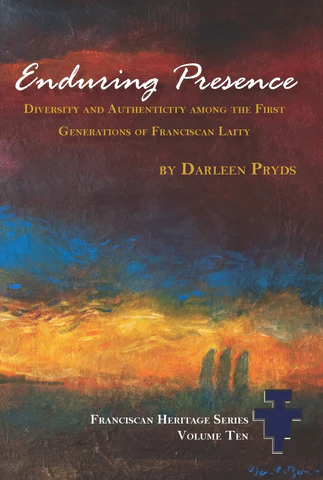
Enduring Presence
Written as a companion volume to Women of the Streets: Early Franciscan Women and their Mendicant Vocation (Franciscan Institute Publications, 2010), Enduring Presence offers more gritty stories of the faith journeys of lay men and lay women who helped create the Franciscan charism in the first generations of the Franciscan movement. Their unique contributions as “somatic theologians” or people who contributed to the Franciscan intellectual tradition by how they lived out the theology and spirituality are mapped out here in this volume and include work, marriage, hospitality, and service as spiritual practice.
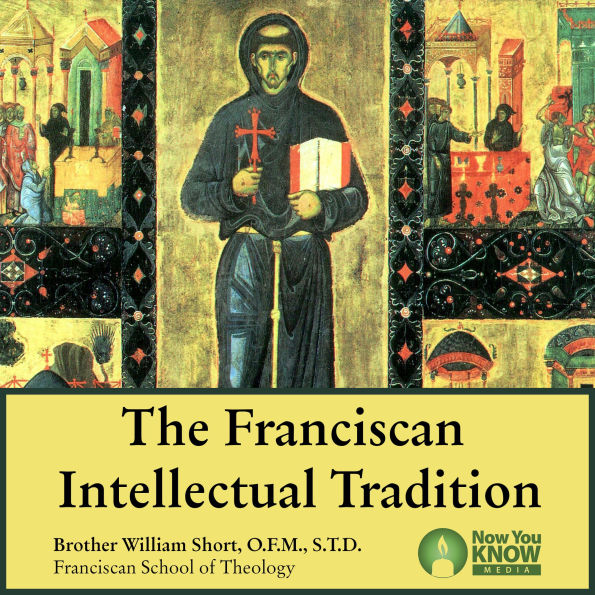
The Franciscan Intellectual Tradition
Explore the Franciscan view of Christ as the center of all creation, and of what the Incarnate Word reveals about life in the Holy Trinity. The Blessed Virgin introduces us to the Franciscan reflection on the human person. Divine and human freedom are explored. Franciscan contributions to the study of Scripture will receive special attention. You will glimpse the inspiration that Francis gave to artists, musicians, novelists, and poets across the centuries, and explore some contemporary institutions that carry forward the Franciscan Tradition he founded eight centuries ago.
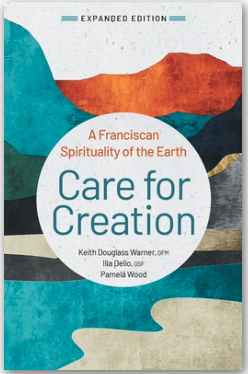
Care for Creation
Illia Delio, OSF, Keith Douglas Warner, OFM and Pamela Wood
Three of the greatest minds in Franciscan theology, Ilia Delio, O.S.F., Franciscan Keith Douglass Warner, O.F.M., and Pamela Wood, come together to discuss one of the greatest crises of our time-the destruction of the Earth. This book takes both a theological and a practical approach to developing a Franciscan spirituality of the earth. Four sections highlight the distinct relationships creation has with the world: incarnation, community, contemplation and conversion. In this meticulously researched book, the authors propose ways in which we can all understand our own roles in relationship to the Earth and ways in which we can make it better.
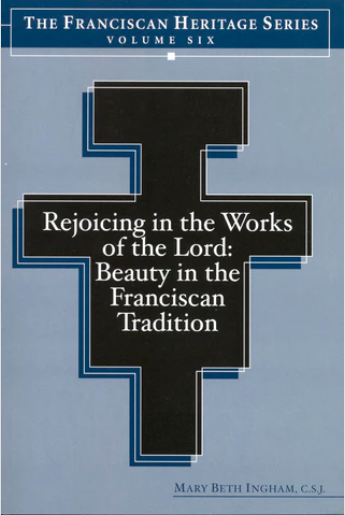
Rejoicing in the Works of the Lord: Beauty in the Franciscan Tradition
The special focus of this study is the appreciation of beauty in the writings of two great theorists of the tradition, Bonaventure of Bagnoregio and John Duns Scotus. Here we see the confluence of a rich earlier tradition of Christian reflection on beauty and its role in our journey toward God. From Augustine to the Victorines, a rich Platonic stream within the Western Catholic tradition spoke of God as Beauty. One of the chief contributions of this presentation is its linkage of the categories of the Good and the Beautiful, of the moral and the aesthetic, within a framework of Franciscan reflection on the world, the human person, and the divine-human encounter.
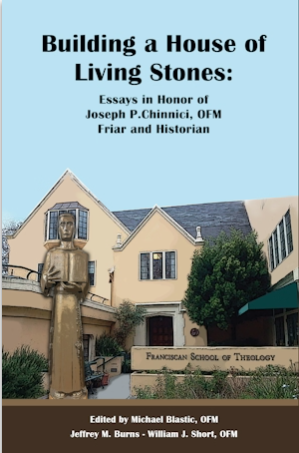
Building a House of Living Stones
Edited by Michael Blastic, OFM, Jeffrey M. Burns and William J. Short, OFM
Joseph P. Chinnici, OFM, is one of the leading lights in the study of US Catholic history, having recently completed his magisterial study, American Catholicism Transformed: From the Cold War through the Council. Chinnici’s scholarship is not limited to the field of US Catholicism; rather he has played a major role in the retrieval of the intellectual tradition inspired by St. Francis of Assisi, serving as General Editor of The Franciscan Heritage Series and helping to found the Commission on the Franciscan Intellectual Tradition.
Building a House of Living Stones invites eleven noted scholars to contribute to this Festschrift on the occasion of Joe’s eightieth birthday. The volume has three areas, reflecting the areas of Joe’s greatest academic contributions: 1) the Franciscan Intellectual Tradition; 2) the sexual abuse crisis in the Catholic Church; and 3) United States Catholic History.
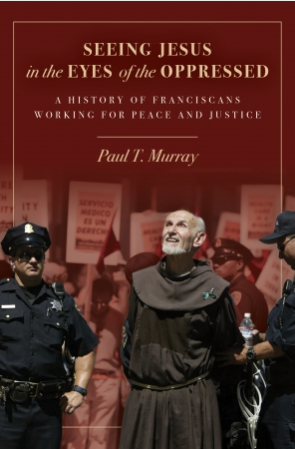
Seeing Jesus in the Eyes of the Oppressed
Following World War II, the United States enjoyed unprecedented prosperity as the post war economy exploded. While Americans pondered affluence, U.S. Franciscans focused on the forgotten members of U.S. society, those who had been left out or left behind.
Seeing Jesus in the Eyes of the Oppressed tells the story of eight Franciscans and their communities who struggled to create a more just and equitable society. Through eight mini-biographies, Paul T. Murray, professor emeritus at Siena College, explores Franciscan efforts to establish racial and economic justice and to promote peace and nonviolence:
- Father Nathaniel Machesky, OFM, led the battle for civil rights in Greenwood, MS.
- Sister Antona Ebo, FSM, was one of two African American Sisters at the Selma march.
- Brother Booker Ashe, OFM Cap. Worked for interracial justice and Black pride in Milwaukee.
- Sister Thea Bowman, FSPA, celebrated Black gifts to the U.S. Church and worked toward an expression of the faith that was “authentically Black and truly Catholic.”
- Father Alan McCoy, OFM, pushed his community and the Church in the United States to greater engagement with Social Justice.
- Sister Pat Drydyk, OFS, worked with Cesar Chavez for justice for the farmworkers.
- Father Joseph Nangle, OFM, brought solidarity with Latin America to the fore in the U.S. Church.
- Father Louis Vitale, OFM, used civil disobedience to oppose nuclear proliferation, while serving the poor and homeless.
In all, the book emphasizes the passion and struggle of Franciscans in the United States to create a more just world within society and within the Church.